

Bringing you the latest news on global issues
Provided by AGP
Asana Recovery Launches Outpatient Eating Disorder Program in Orange County

Sheida Shavalian, LMFT, Clinical Director at Asana Recovery, leads the organization's new outpatient eating disorder treatment program.

Roughly 50% of people with an eating disorder also struggle with substance use — about five times the rate seen in the general population. Asana Recovery's new outpatient program is built to treat both conditions together.

Asana Recovery's integrated outpatient model treats eating disorders alongside co-occurring substance use and mental health conditions — with one clinical team, in one place.

Asana Recovery offers a full outpatient continuum of care for eating disorders — Partial Hospitalization (PHP), Intensive Outpatient (IOP), standard Outpatient (OP), and Virtual IOP — allowing patients to step into the level of care that fits their needs
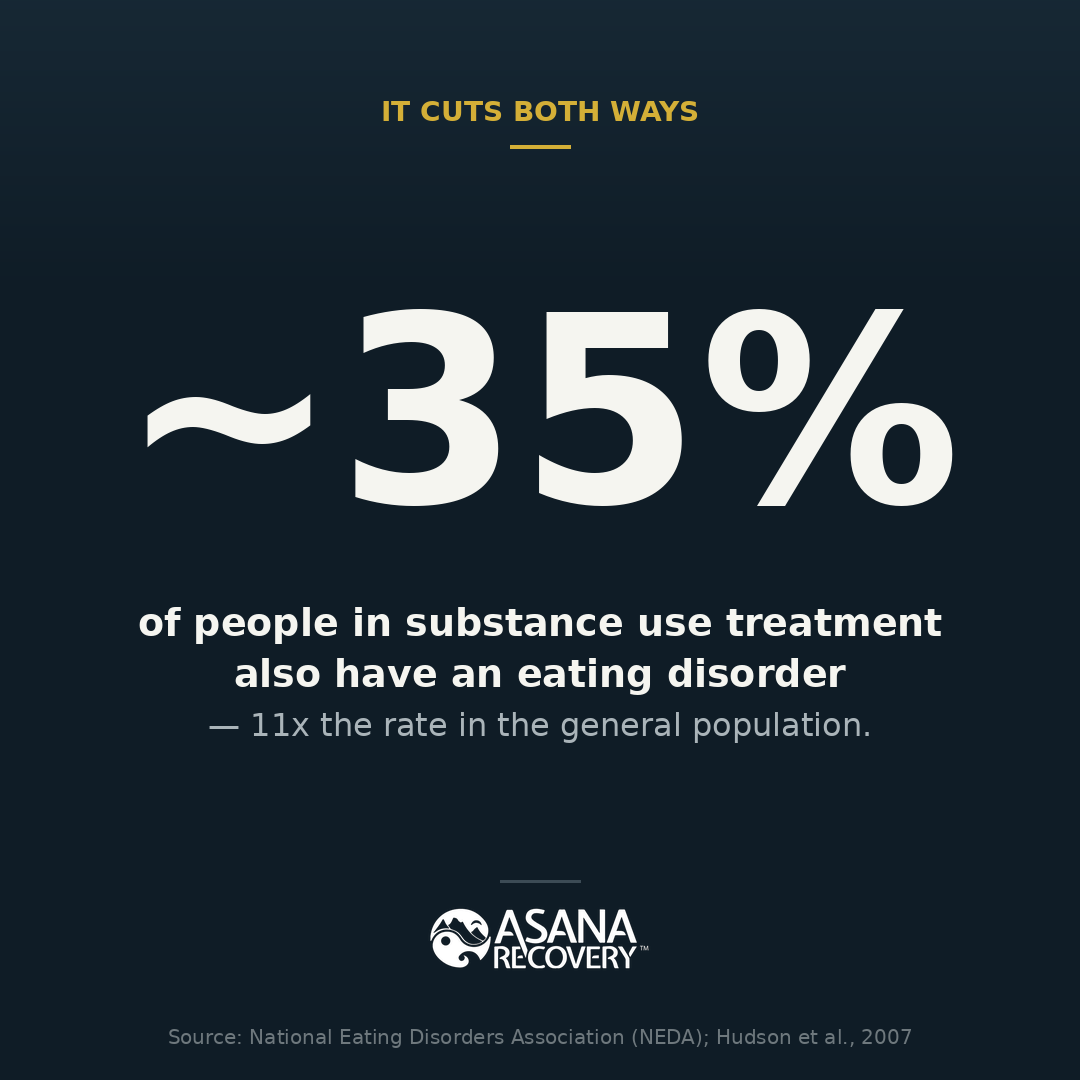
Up to 35% of people in substance use treatment also have an eating disorder — about 11 times the rate seen in the general population. The overlap runs in both directions.
Four-time Newsweek Best Treatment Center expands its integrated, dual-diagnosis model to address eating disorders and co-occurring conditions.
Eating disorders rarely show up alone. Our model treats the whole person, with one clinical team, in one place.”
— Sheida Shavalian, LMFT, Clinical Director, Asana Recovery
FOUNTAIN VALLEY, CA, UNITED STATES, May 21, 2026 /EINPresswire.com/ -- Asana Recovery, a Joint Commission-accredited and four-time Newsweek Best Treatment Center, today announced the launch of its new outpatient eating disorder treatment program serving adults across Orange County, Los Angeles, and San Diego. The program brings the same integrated, dual-diagnosis approach Asana is known for to one of the most underserved patient populations in behavioral health: adults living with an eating disorder alongside a co-occurring substance use disorder or mental health condition.
A Clinical Gap That Costs Lives
Research consistently shows that roughly half of people with an eating disorder also struggle with substance use — about five times the rate seen in the general population. Conversely, up to a third of people in substance use treatment also meet criteria for an eating disorder. The combination carries serious clinical consequences: a 2022 study in the American Journal of Psychiatry found that comorbid substance use disorders were associated with up to an 11-fold increased risk of death across all eating disorder types.
Despite that overlap, most treatment centers are built to address one condition or the other. Patients are routinely sent from a substance use program to an eating disorder program — or vice versa — receiving conflicting clinical guidance, repeating their histories, and losing continuity of care at exactly the moments it matters most. Asana Recovery's new outpatient eating disorder program is designed to close that gap.
"Eating disorders rarely show up alone," said Sheida Shavalian, LMFT, Clinical Director at Asana Recovery. "The adults we work with are often navigating anxiety, depression, trauma, or substance use at the same time. Treating those conditions in sequence — or in separate programs — doesn't work. Our model treats the whole person, with one clinical team, in one place."
An Established Outpatient Continuum
The program is delivered by licensed clinicians within Asana Recovery's established outpatient continuum of care, including Partial Hospitalization (PHP), Intensive Outpatient (IOP), standard Outpatient (OP), and Virtual IOP. This range allows patients to enter at the level of care that fits their clinical needs and step down as they progress in recovery — without changing providers, repeating intake assessments, or starting over with a new clinical team.
A patient stepping down from inpatient or residential treatment, for example, can begin in PHP with full-day clinical structure five days a week, transition to IOP as stability improves, and continue into standard OP for ongoing support — all while maintaining the same care team. For patients balancing work, school, or caregiving responsibilities, evening IOP tracks and Virtual IOP make consistent treatment accessible without putting life on hold.
Program Highlights
- Integrated dual-diagnosis treatment for co-occurring eating disorders and substance use, mental health, or trauma-related conditions
- Full outpatient continuum: PHP, IOP, OP, and Virtual IOP, with the ability to step up or down as clinical needs change
- Evidence-based modalities including CBT, DBT, ACT, EMDR, trauma-informed care, group therapy, and family involvement
- Psychiatric evaluation, medication management, and Medication-Assisted Treatment (MAT) available for co-occurring substance use
- Nutrition education and supported meal experiences, coordinated with licensed medical providers as clinically indicated
- Trusted partner network for inpatient and residential referrals when a higher level of care is required
- In-network with major insurers including Anthem Blue Cross, Aetna, Cigna, TRICARE, TriWest VA, ComPsych, and others
Eating Disorders Treated
The program supports adults living with anorexia nervosa, bulimia nervosa, binge eating disorder (BED), other specified feeding or eating disorder (OSFED), avoidant/restrictive food intake disorder (ARFID), and disordered eating patterns that interfere with daily life, mental health, or physical wellness — whether or not they meet full diagnostic criteria.
A Multidisciplinary Clinical Team
The program is led by Sheida Shavalian, LMFT, Asana Recovery's Clinical Director, a USC-trained Licensed Marriage and Family Therapist with more than a decade of clinical experience in mental health and substance use treatment. She brings advanced specialization in psychoanalytic, psychodynamic, and cognitive-behavioral therapies, and partners with Asana's psychiatric providers, medical director, group facilitators, and nutrition support staff to deliver coordinated, individualized care.
Each patient receives a personalized treatment plan built from a confidential clinical assessment that examines medical history, eating patterns, mental health, substance use, and existing support systems. Throughout treatment, the clinical team coordinates with outside providers — including primary care physicians and dietitians — so care remains integrated rather than fragmented.
Who the Program Serves
Asana Recovery's outpatient eating disorder program is designed for medically stable adults with mild-to-moderate presentations, individuals managing co-occurring substance use or mental health conditions, and patients stepping down from inpatient or residential treatment who need a structured outpatient environment to continue recovery.
For patients whose clinical needs require 24-hour medical supervision or residential care — including those with severe medical instability or extremely low body weight — Asana coordinates referrals through its trusted partner network of inpatient and residential providers, ensuring patients can access the right level of care at every stage of recovery.
A Natural Extension of Integrated Care
"This is a natural extension of how we've always worked," said Mark Shandrow, CEO of Asana Recovery. "Our roots are in integrated care — substance use, mental health, and behavioral health treated side by side rather than in sequence. Bringing eating disorder treatment into that framework lets us serve patients who have, for too long, been told to pick which condition to address first. The clinical evidence has been clear for years that this approach saves lives. We're proud to bring it to Orange County."
Availability and Admissions
The outpatient eating disorder program is accepting new patients now. Admissions, insurance verification, and free, confidential clinical assessments are available by calling (949) 763-3440 or visiting the program page. The program operates from Asana Recovery's primary campus at 18101 Magnolia Street in Fountain Valley, with additional outpatient locations in Costa Mesa and Huntington Beach, and Virtual IOP available throughout California.
About Asana Recovery
Asana Recovery is a Joint Commission-accredited outpatient treatment provider based in Fountain Valley, California, with additional locations in Costa Mesa and Huntington Beach. Recognized as a Newsweek Best Treatment Center four years running, Asana Recovery offers integrated outpatient care for substance use disorders, mental health conditions, dual diagnosis, and — as of May 2026 — eating disorders. The organization is licensed by the California Department of Health Care Services (License #300043EP) and is in-network with most major commercial insurers, TRICARE, and TriWest VA. Learn more at asanarecovery.com.
If you or someone you love is in crisis, the National Alliance for Eating Disorders helpline is available at 1-866-662-1235.
Adam Shandrow
Asana Recovery
+1 (562) 972-3955
email us here
Visit us on social media:
LinkedIn
Instagram
Facebook
YouTube
X
Legal Disclaimer:
EIN Presswire provides this news content "as is" without warranty of any kind. We do not accept any responsibility or liability for the accuracy, content, images, videos, licenses, completeness, legality, or reliability of the information contained in this article. If you have any complaints or copyright issues related to this article, kindly contact the author above.
