

Dr. Gail Christopher Reflects on Five Decades of Advocacy for Black Maternal Health at Black Maternal Health Conference

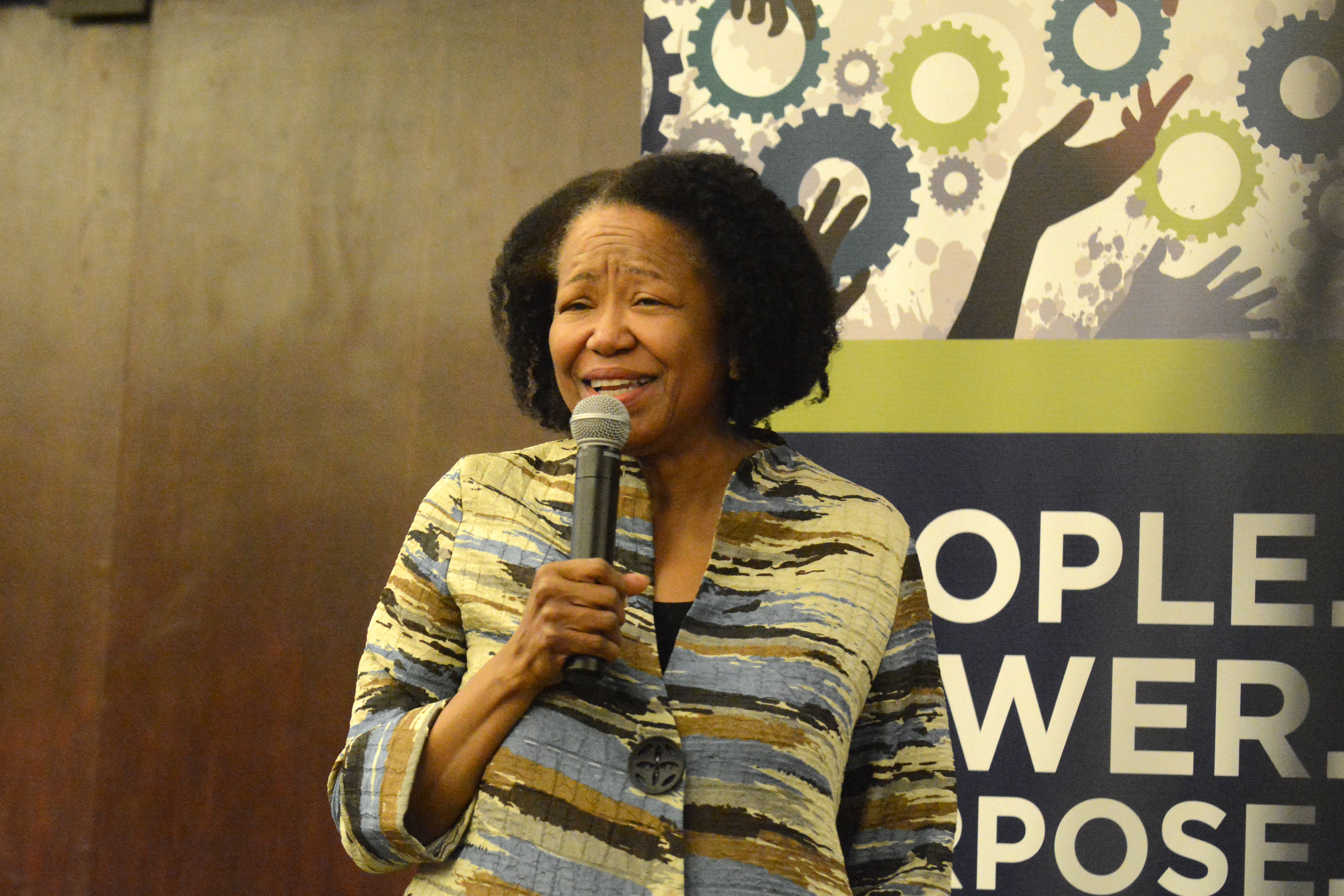
Dr. Gail C. Christopher
Sharing insights from her work, Dr. Christopher asserted that achieving health equity requires addressing racism at both individual and structural levels.
BOSTON, MA, UNITED STATES, April 16, 2026 /EINPresswire.com/ -- Dr. Gail C. Christopher, a renowned advocate for health equity and racial healing, recently delivered a powerful keynote address at the 9th Annual Black Maternal Health Conference, hosted by the Center for Black Maternal Health and Reproductive Justice at Tufts University. Themed “Women’s Health Now: Innovations, Equity, and Whole-Person Care,” the event brought together healthcare professionals, policymakers, and community leaders to address the urgent need for systemic change in Black maternal health outcomes.
Dr. Christopher delivered a heartfelt reflection on her personal and professional journey spanning over five decades. She shared poignant stories of loss and resilience, underscoring the persistent disparities in maternal and infant health that disproportionately affect Black women and their families. Her message was both a call to action and a celebration of progress, emphasizing the importance of innovation, equity, compassion, and community-driven solutions.
“Thank you so much for inviting me to share my thoughts and my experiences with you today. It's an honor for me to share the insights that I've gained over, honestly, more than 50 years of trying to improve outcomes,” she said at the April 10th event. “As we come together to do this work, to take care of our mothers and to take care of our babies, we need to lead with love…and recognize that it will take courage, but we have demonstrated that courage for centuries, and we are continuing to do that today.”
Dr. Christopher began her address by recounting deeply personal experiences that shaped her lifelong commitment to improving maternal and infant health. Growing up in Cleveland, Ohio - a city with some of the nation’s starkest racial health disparities - she witnessed the devastating impact of maternal and infant mortality within her own community. These early experiences, coupled with the loss of her firstborn child, ignited her passion for addressing the systemic inequities that contribute to these tragedies.
“I had a personal relationship with maternal and infant mortality long before I understood it as a national disparity,” shared Dr. Christopher, who is Executive Director of the National Collaborative for Health Equity (NCHE). “These experiences fueled my determination to ensure that Black women have healthy pregnancies and healthy babies.”
Her journey led to a career as a licensed naprapath and clinical nutritionist, where she worked in partnership with gynecologists to provide holistic care to expectant mothers. Dr. Christopher highlighted the success of her approach, noting that the thousands of women she counseled experienced significantly improved outcomes, with no maternal deaths and only rare instances of low birth weight.
Dr. Christopher praised the conference’s theme of “Reimagining” maternal health, emphasizing the need to envision a future where health equity is a reality. She reflected on her leadership of the Joint Center for Political and Economic Studies’ Health Policy Institute nearly two decades ago, where she spearheaded the Courage to Love Commission. This initiative focused on the role of stress, social determinants, and relational support in Black maternal health outcomes.
“We understood that at the heart of this chronic problem was the issue of relationships—support systems that could improve circumstances and outcomes for Black women,” Dr. Christopher explained. She highlighted the commission’s groundbreaking work on breastfeeding, nutrition, and community-based interventions, many of which have since been integrated into policy and practice.
Dr. Christopher also celebrated recent advancements, including the White House’s 2024 conference on maternal health and the introduction of the Momnibus legislation—a comprehensive package of policies to address the social determinants of health and access to quality care for expectant mothers. She expressed optimism about the potential impact of these initiatives, while acknowledging the need for continued advocacy to ensure their passage and implementation.
A central theme of Dr. Christopher’s address was the critical importance of nutrition and environmental factors during pregnancy. She highlighted the emerging field of epigenetics, which examines how external factors influence gene expression during fetal development.
“In that one percent of the life course—during pregnancy—environmental and nutritional factors are most critical,” she explained. These factors determine whether genes that predispose to chronic disease or disabilities are expressed. Proper nutrition and stress reduction are essential to optimizing outcomes for both mother and child.”
Dr. Christopher applauded initiatives such as the Food is Medicine movement and recent efforts to expand nutrition education in medical schools. However, she noted the absence of Historically Black Colleges and Universities (HBCUs) in these efforts and called for greater inclusion and investment in institutions that serve Black communities.
She asserted that achieving health equity requires addressing racism at both individual and structural levels. She shared insights from her work at the W.K. Kellogg Foundation, where she designed the Truth, Racial Healing, and Transformation (TRHT) framework - a national initiative aimed at dismantling the belief in a hierarchy of human value and transforming systems that perpetuate inequities.
“Racism is not just a factor; it is the root cause of the disparities we see,” Dr. Christopher stated. “We must tackle the belief systems and structures that sustain inequities, from segregation and redlining to inequities in transportation, housing, and the legal system.”
The TRHT framework—which includes pillars focused on narrative change, relationship building, and structural transformation—has been introduced to more than 250 jurisdictions across the United States. According to the American Public Health Association, these jurisdictions have declared racism a public health crisis. Dr. Christopher highlighted the importance of community-driven solutions, noting that local leaders are using tools like the Health Opportunity for Equity (HOPE) Data Initiative to set quantifiable goals and hold policymakers accountable.
Despite the challenges, she expressed unwavering optimism about the future of Black maternal health. She pointed to the progress made in recent decades, including the establishment of baby-friendly hospitals, the inclusion of breastfeeding protections in the Affordable Care Act, and the proliferation of community-based birthing centers and support programs like Centering Pregnancy.
“These advancements remind us that change is possible,” she said. “We are not the resistance; this moment of inequity is the resistance. Our movement toward equity is the inevitability of progress.”
Dr. Christopher concluded her address with a call to lead with love and courage, inspiring healthcare professionals, policymakers, and community leaders to work together toward a more equitable future rooted in compassion and resilience.
****
Dr. Gail C. Christopher
Dr. Gail C. Christopher is the Executive Director of the National Collaborative for Health Equity, which promotes health equity by harnessing data, developing leaders, and catalyzing partnerships to create a more equitable and just society. She is also a Senior Scholar at the Center for Advancement of Well-Being at George Mason University and a former Senior Advisor and Vice President of the W. K. Kellogg Foundation. Her latest book is RX-Racial Healing: A Guide to Embracing Our Humanity.
About the Center for Black Maternal Health and Reproductive Justice
The Center for Black Maternal Health and Reproductive Justice at Tufts University is dedicated to advancing health equity and improving outcomes for Black women and their families. Through research, advocacy, and education, the Center works to address systemic barriers and promote innovative solutions in maternal and reproductive health.
Michael K. Frisby
Frisby & Associates
+1 202-625-4328
email us here
Legal Disclaimer:
EIN Presswire provides this news content "as is" without warranty of any kind. We do not accept any responsibility or liability for the accuracy, content, images, videos, licenses, completeness, legality, or reliability of the information contained in this article. If you have any complaints or copyright issues related to this article, kindly contact the author above.
