

Carbon-Neutral Fiber Yarns Market Poised to Reach USD 2.6 Bn by 2036 as Textile Supply Chains Accelerate Decarbonization
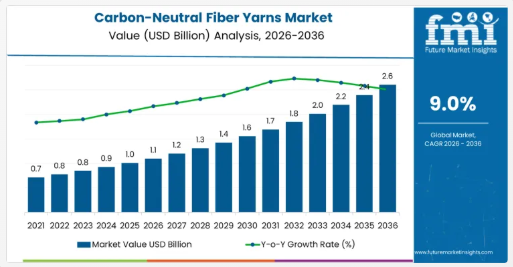
Carbon-neutral fiber yarns gain traction as textile brands integrate low-emission materials and traceable sourcing into procurement strategies.
NEWARK, DE, UNITED STATES, January 20, 2026 /EINPresswire.com/ -- The global carbon-neutral fiber yarns market is projected to experience sustained expansion over the next decade, with market value expected to rise from approximately USD 1.1 billion in 2026 to an estimated USD 2.6 billion by 2036. This growth reflects a compound annual growth rate of about 9 percent, driven by corporate net-zero commitments, tightening environmental regulations, and increasing demand for traceable, low-emission textile inputs.
Carbon-neutral fiber yarns are increasingly being adopted across apparel, home textiles, technical fabrics, and industrial applications as manufacturers and brands seek to reduce lifecycle emissions embedded within raw materials. The market’s evolution reflects a broader structural shift in the global textile industry toward documented sustainability and transparent supply chains.
Market Overview: What Are Carbon-Neutral Fiber Yarns
Carbon-neutral fiber yarns are produced using manufacturing processes designed to minimize greenhouse gas emissions across energy use, material sourcing, and processing stages. Remaining emissions are measured using standardized carbon accounting frameworks and neutralized through validated mitigation mechanisms, enabling suppliers to offer yarns with documented carbon-neutral status.
Unlike conventional yarns, these materials are increasingly treated as compliance-driven inputs rather than optional sustainability upgrades. Procurement decisions now factor in auditability, emissions reporting compatibility, and traceability alongside traditional performance and cost considerations.
Key Growth Drivers: Why Demand Is Rising
The primary driver of market growth is the alignment of textile sourcing strategies with corporate decarbonization goals. Global brands and manufacturers are integrating carbon-neutral materials to address Scope 3 emissions, meet sustainability disclosures, and comply with emerging environmental standards.
Regulatory oversight of textile and apparel supply chains continues to intensify, particularly in regions with mandatory sustainability reporting. As a result, suppliers capable of delivering verified low-carbon yarns are gaining preference in long-term sourcing contracts and approved vendor programs.
How the Market Is Structured: Certification and Procurement
Demand for carbon-neutral fiber yarns is closely linked to certification and verification frameworks that govern carbon claims. These frameworks establish chain-of-custody requirements, emissions measurement methodologies, and documentation standards that suppliers must meet to support procurement and audit processes.
Polyester-based and blended yarns represent a significant share of the market due to their established production scale and compatibility with traceability systems. Their widespread use across apparel and technical textiles positions them as early adopters of carbon-neutral certification models.
Regional Landscape: Where Growth Is Concentrated
Asia Pacific represents the largest and fastest-growing regional market, supported by the scale of textile manufacturing operations and increasing adoption of sustainability standards across export-oriented supply chains. China leads regional growth due to its manufacturing capacity and expanding implementation of low-carbon production practices.
North America and Europe continue to show strong demand, driven by brand-led sustainability initiatives, regulatory compliance requirements, and investor scrutiny. Markets such as the United States, Germany, Japan, and South Korea demonstrate consistent uptake across apparel and industrial textile segments.
Competitive Environment: Industry Positioning
Competition in the carbon-neutral fiber yarns market centers on certification credibility, supply consistency, and documentation quality. Established fiber producers with vertically integrated operations and advanced carbon accounting systems are better positioned to meet procurement and audit requirements.
Key competitive strategies include expanding certified product portfolios, improving transparency across production stages, and aligning offerings with evolving sustainability frameworks used by global brands and institutional buyers.
Market Challenges and Constraints
Despite positive growth prospects, adoption barriers remain. Carbon-neutral yarns typically involve higher production and compliance costs compared to conventional alternatives. Additionally, certification complexity and uneven access to renewable energy infrastructure across regions can limit scalability in cost-sensitive segments.
These constraints may slow adoption in certain markets until certification processes become more standardized and production efficiencies improve.
Outlook: What Comes Next
Looking ahead, the market is expected to evolve through deeper integration of carbon neutrality with recycled and bio-based fiber innovations. Advancements in digital carbon accounting, standardized reporting tools, and energy-efficient manufacturing are anticipated to reduce verification burdens and improve cost competitiveness.
As sustainability requirements continue to influence sourcing decisions, carbon-neutral fiber yarns are expected to play an increasingly central role in textile supply chain strategies, supporting emissions reduction targets while maintaining material performance and reliability.
Request for Sample Report | Customize Report |purchase Full Report – https://www.futuremarketinsights.com/reports/sample/rep-gb-31579
Explore More Related Studies Published by FMI Research:
Textile Staples Market https://www.futuremarketinsights.com/reports/textile-staples-market
MEMS Inkjet Heads Market https://www.futuremarketinsights.com/reports/mems-inkjet-heads-market
Industrial X-ray Films Market https://www.futuremarketinsights.com/reports/industrial-x-ray-films-market
About Future Market Insights (FMI)
Future Market Insights, Inc. (FMI) is an ESOMAR-certified, ISO 9001:2015 market research and consulting organization, trusted by Fortune 500 clients and global enterprises. With operations in the U.S., UK, India, and Dubai, FMI provides data-backed insights and strategic intelligence across 30+ industries and 1200 markets worldwide.
Why Choose FMI: https://www.futuremarketinsights.com/why-fmi
Sudip Saha
Future Market Insights Inc.
+1 347-918-3531
rahul.singh@futuremarketinsights.com
Legal Disclaimer:
EIN Presswire provides this news content "as is" without warranty of any kind. We do not accept any responsibility or liability for the accuracy, content, images, videos, licenses, completeness, legality, or reliability of the information contained in this article. If you have any complaints or copyright issues related to this article, kindly contact the author above.
