

Why China’s Epoxy Glue Adhesive Factories are Becoming the Preferred Choice for Infrastructure
The trajectory of the adhesive industry is currently moving toward high-performance, environmentally friendly solutions. As global standards for volatile organic compound (VOC) emissions tighten, the industry has seen a significant pivot toward UV-curable and water-borne technologies. China’s manufacturing hub has adapted rapidly to these trends, moving beyond traditional formulations to specialize in complex chemical structures like epoxy acrylates and polyurethane acrylates. This technological maturation ensures that the adhesives used in infrastructure can withstand structural stress, moisture, and thermal fluctuations over decades.
Evolution of Resin Technology at the Source
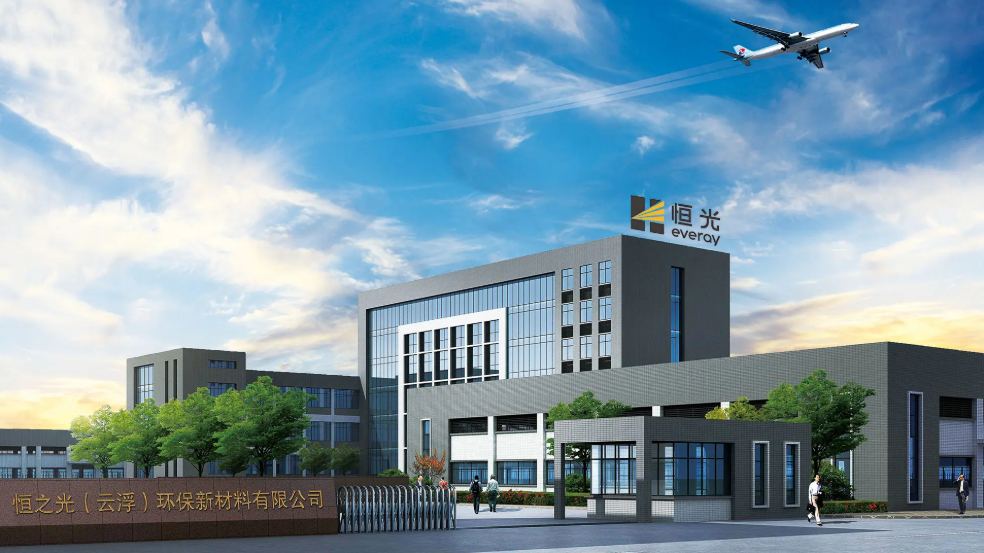
To understand why international infrastructure projects are looking toward Guangdong-based manufacturers, one must look at the technical foundation laid by companies such as Guangdong Ever Ray Environmental Material Co., Ltd. Founded in 2006, this high-tech enterprise has spent nearly two decades refining the R&D of oligomers. These are the crucial building blocks of high-performance adhesives.
The manufacturing process in these modern facilities focuses on the synthesis of specialized components including aliphatic and aromatic urethane acrylates, as well as polyester acrylates. For infrastructure, the choice of oligomer is critical. An aliphatic urethane acrylate, for instance, offers superior weather resistance and non-yellowing properties, making it ideal for outdoor structural coatings and bonds. Meanwhile, epoxy acrylates provide the rigid strength and chemical resistance necessary for reinforcing concrete and steel interfaces.
The Strategic Shift Toward UV-Curable Systems
A major driver behind the preference for Chinese adhesive components is the rapid adoption of UV-curable resin technology. Traditional adhesives often require long curing times, which can delay massive construction projects. In contrast, UV-curable systems allow for near-instant bonding upon exposure to specific light wavelengths.
Factories in China have mastered the production of modified acrylate oligomers that facilitate this fast-curing process without compromising the mechanical integrity of the bond. This efficiency is a game-changer for onsite applications, such as pipe repairs or bridge deck overlays, where minimizing downtime is a high-priority financial and logistical goal. By sourcing from factories that specialize in these UV-curable oligomers, engineers can implement faster assembly lines for pre-cast components and on-site reinforcements.
Material Versatility: From Water-Borne to Specialized Acrylates
Infrastructure projects are rarely uniform; a coastal bridge requires different chemical protection than a desert-based solar farm. Chinese manufacturers have addressed this by diversifying their product portfolios. Water-borne polyurethane acrylates have gained traction as a sustainable alternative to solvent-based systems, offering a reduced environmental footprint while maintaining high adhesion levels.
Furthermore, the development of "pure acrylates" and other "special functional modified acrylates" allows for hyper-specific applications. These might include adhesives designed for high-vibration environments, such as railway tracks, or those requiring extreme thermal stability for power plant infrastructure. The ability of a single production hub to provide such a wide array of specialized chemical intermediates simplifies the supply chain for global construction firms.
Engineering Durability: The Role of Epoxy Acrylate
At the heart of structural bonding lies epoxy acrylate. This material combines the toughness and chemical resistance of epoxy resins with the fast-curing properties of acrylates. In the context of infrastructure, this material is frequently used in protective coatings for rebar, preventing corrosion that could lead to structural failure.
Because factories like Ever Ray focus on the R&D of these oligomers, they can fine-tune the molecular weight and viscosity of the resin. This level of customization ensures that the final adhesive product has the right flow characteristics to penetrate deep into concrete fissures or provide a uniform layer over steel surfaces. The precision in the chemical "recipe" directly translates to the longevity of the infrastructure it supports.
Supply Chain Resilience and Technical Support
Beyond the chemical formulas, the logistical infrastructure of Chinese manufacturing hubs provides a level of reliability that is essential for large-scale projects. The integration of R&D with mass production allows for a seamless transition from laboratory-scale testing to industrial-scale delivery.
Reliable factories provide extensive technical documentation and testing data, which is vital for meeting international building codes and safety standards. This transparency in chemical composition and performance metrics has built trust between Chinese suppliers and global engineering firms. When a project requires thousands of tons of high-performance resin, the scalability of these specialized factories ensures that material shortages do not become a bottleneck for development.
Environmental Stewardship in Chemical Manufacturing
The "Environmental" in Guangdong Ever Ray Environmental Material Co., Ltd. reflects a broader industry movement within China. There is a concerted effort to move toward "Green Chemistry." This includes reducing the energy intensity of the resin synthesis process and eliminating hazardous byproducts.
For the infrastructure sector, which is under increasing pressure to meet ESG (Environmental, Social, and Governance) targets, sourcing materials from environmentally conscious factories is no longer optional. The development of high-solids and water-borne resins allows contractors to claim lower carbon footprints for their projects, aligning the physical strength of the structure with modern ecological standards.
The Synergy of Research and Application
The success of these manufacturing entities is largely rooted in their identity as "high-tech enterprises." This designation implies a heavy investment in laboratory equipment and doctoral-level research teams. By focusing on the molecular level—specifically oligomers—these factories influence the performance of the final adhesive in ways that generalist manufacturers cannot.
Whether it is modifying an acrylate to increase its flexibility or enhancing the moisture resistance of a polyester acrylate, the focus remains on solving specific engineering challenges. This research-centric approach ensures that the products remain relevant as infrastructure evolves toward smarter, more sensor-integrated designs.
Looking Toward a Bonded Future
As urban centers expand and the need for more resilient transportation and energy networks grows, the role of high-performance adhesives will only become more critical. The transition of China’s chemical sector from a volume-based provider to a value-added, R&D-driven partner has redefined the global market.
By focusing on the sophisticated chemistry of UV-curable resins and specialized oligomers, these manufacturing centers provide the "molecular glue" that holds modern civilization together. The combination of technical expertise, environmental consideration, and industrial scale makes these facilities a natural choice for those tasked with building the world of tomorrow.
The commitment to continuous innovation in the field of environmental materials ensures that the infrastructure we build today will remain stable, secure, and sustainable for future generations. For those seeking detailed technical specifications and the latest developments in resin technology, more information is available at https://www.everayuvresin.com/.
Guangdong Ever Ray Environmental Material CO.,Ltd
Guangdong Ever Ray Environmental Material CO.,Ltd
+86 18922029033
email us here
Legal Disclaimer:
EIN Presswire provides this news content "as is" without warranty of any kind. We do not accept any responsibility or liability for the accuracy, content, images, videos, licenses, completeness, legality, or reliability of the information contained in this article. If you have any complaints or copyright issues related to this article, kindly contact the author above.
